
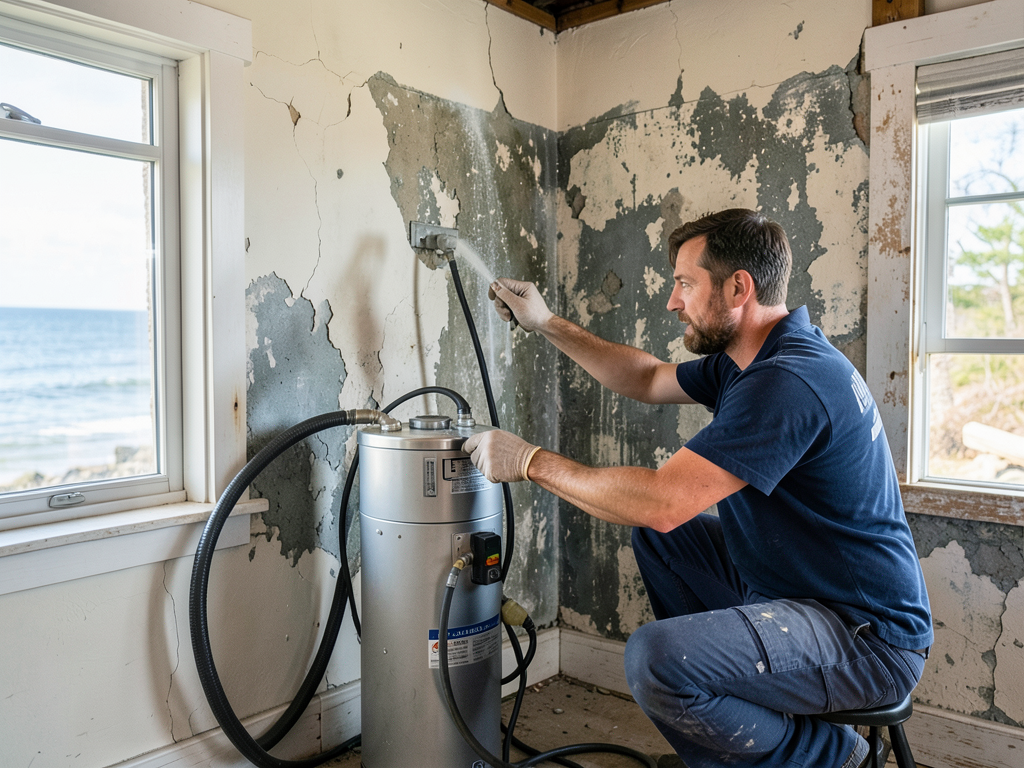
Why salt water flooding in Lucas Point requires a different restoration approach than rain
Salt water flooding in Lucas Point creates unique challenges that standard water damage restoration cannot address. The corrosive nature of sodium chloride attacks building materials and electrical systems in ways fresh rainwater never could. Understanding these differences determines whether a coastal Greenwich property survives or suffers permanent damage. Emergency Water Damage Restoration for Old Greenwich Coastal Homes.
The chemistry behind salt water damage
Salt water contains approximately 35 grams of dissolved salts per liter compared to fresh water’s near-zero salt content. When salt water floods a Lucas Point basement or ground floor, the dissolved sodium and chloride ions begin immediate chemical reactions with metal components. Steel corrodes 5 to 10 times faster in salt water than in fresh water due to the formation of iron chloride compounds. Water Damage Restoration Meriden.
The hygroscopic nature of salt creates ongoing problems. Salt residue continues attracting moisture from the air even after visible flooding recedes. This persistent dampness prevents proper drying and creates ideal conditions for mold growth. A Lucas Point home that appears dry may still harbor dangerous moisture levels weeks after a salt water event.
Salt water also conducts electricity more efficiently than fresh water. When electrical panels or wiring contacts salt water, the increased conductivity causes rapid corrosion of copper conductors and creates dangerous short circuits. Many Lucas Point properties experience electrical failures days after salt water intrusion when corrosion progresses through protective coatings.. Read more about Why driving rain causes your Old Greenwich windows to leak (and how to stop it).
Why Lucas Point faces higher risk than inland areas
Lucas Point sits directly on Long Island Sound where storm surges can push salt water several blocks inland during major weather events. The neighborhood’s low elevation and proximity to the coast make it particularly vulnerable to coastal flooding. During nor’easters, Lucas Point experiences storm surge levels 3 to 4 feet higher than inland Greenwich areas.
The soil composition in Lucas Point affects flood behavior. The area features sandy soils that drain quickly but also allow salt water to penetrate deeper into basements and crawl spaces. Once salt water enters these spaces, the porous nature of the soil makes complete extraction difficult without specialized equipment. Basement Waterproofing Guide.
Many Lucas Point homes were built before modern flood-resistant construction standards. Older foundations lack proper waterproofing membranes and drainage systems that could prevent salt water intrusion. The combination of aging infrastructure and coastal vulnerability creates a perfect storm for salt water damage.. Read more about How to vet a restoration contractor before they enter your gated Mead Point property.
Specialized restoration steps for salt water damage
Standard water damage restoration procedures fail when applied to salt water flooding. The process requires specific modifications to address the corrosive and hygroscopic properties of salt. Here are the critical steps that distinguish salt water restoration from fresh water remediation.
Step 1: Emergency salt extraction
Initial water removal must happen within 2 to 4 hours to minimize salt penetration into porous materials. High-capacity pumps extract standing salt water, but the process differs from fresh water extraction. Technicians must account for the increased density of salt water, which requires more powerful equipment to achieve complete removal.
During extraction, moisture meters detect salt concentration levels in affected materials. Salt water creates distinctive electrical conductivity patterns that standard moisture meters cannot accurately measure. Specialized meters designed for salt detection guide the extraction process to ensure no residual salt remains in hidden areas.
Step 2: Desalination and surface treatment
After bulk water removal, surfaces require desalination to neutralize remaining salt deposits. Technicians apply specialized cleaning solutions that break down salt crystals and prevent re-crystallization. This step involves multiple passes with different chemical formulations depending on the material type.
Wood surfaces need specific treatment to prevent salt-induced warping and splitting. Salt draws moisture from wood cells, causing dimensional changes that standard drying cannot reverse. Desalination solutions stabilize the wood structure before structural drying begins.
Step 3: Electrical system decontamination
Electrical systems exposed to salt water require complete decontamination before restoration can proceed. This involves removing and cleaning all electrical panels, outlets, switches, and wiring that contacted salt water. The process follows National Electrical Code requirements for equipment exposed to corrosive environments.
Technicians use specialized cleaning agents that neutralize salt deposits without damaging electrical components. Each connection point receives individual attention since salt tends to accumulate in these areas. After cleaning, components undergo electrical testing to verify safe operation before reinstallation.
Step 4: Structural drying with salt monitoring
Standard structural drying equipment cannot address the unique challenges of salt-damaged materials. Desiccant dehumidifiers operate at lower temperatures to prevent salt migration during the drying process. The goal shifts from simply removing moisture to preventing salt crystal growth within materials.
Moisture meters with salt detection capabilities monitor progress throughout drying. These devices measure both moisture content and salt concentration, ensuring complete remediation. The process typically takes 3 to 5 days longer than fresh water damage restoration due to the additional desalination requirements.
Step 5: Post-remediation verification
Final verification involves comprehensive testing to confirm complete salt removal. Surface testing identifies any remaining salt deposits that could cause future problems. Moisture mapping ensures no hidden pockets of dampness remain that could support mold growth.
Electrical systems undergo final testing to verify proper operation after decontamination. Any components showing signs of corrosion receive replacement rather than risk future failures. The verification process provides documentation for insurance claims and ensures property safety.. Read more about Should You Restore or Replace Your Water Damaged Oriental Rugs?.
Common salt water damage scenarios in Lucas Point
Storm surge flooding represents the most severe salt water damage scenario in Lucas Point. During major coastal storms, Long Island Sound can rise 6 to 8 feet above normal levels, pushing salt water into basements and ground floors. These events typically occur 2 to 3 times per decade and cause widespread damage across the neighborhood.
Burst pipes during winter months create another salt water damage scenario. Many Lucas Point homes use water softeners that introduce salt into plumbing systems. When pipes freeze and burst, the resulting water contains elevated salt levels that accelerate corrosion in affected areas. Fast Burst Pipe Repair and Water Extraction in Mid-Country Greenwich.
Foundation cracks allow gradual salt water intrusion during high tides. Small cracks that seem harmless during normal conditions can admit significant salt water during tidal events. The slow, persistent nature of this intrusion often goes unnoticed until substantial damage occurs.
Roof damage during coastal storms introduces salt water through compromised roofing materials. Wind-driven salt spray penetrates roofing systems, causing corrosion of structural components and creating moisture problems that standard roof repairs cannot address. EPA National Pollutant Discharge Elimination System.
Insurance considerations for salt water damage
Standard homeowners insurance policies typically exclude salt water damage from coastal flooding. Lucas Point residents need separate flood insurance through the National Flood Insurance Program or private carriers. These policies specifically address salt water damage scenarios and provide coverage for the specialized restoration procedures required.
Insurance claims for salt water damage require detailed documentation of the restoration process. Standard water damage claims cannot capture the additional costs of desalination, electrical decontamination, and extended drying times. Working with restoration companies experienced in salt water damage ensures proper documentation and claim approval.
Many Lucas Point properties qualify for premium discounts when equipped with flood mitigation systems. These systems include backflow preventers, sump pumps with battery backup, and foundation waterproofing. Insurance companies recognize these investments as reducing salt water damage risk and offer corresponding premium reductions.
Prevention strategies for Lucas Point properties
Property owners in Lucas Point can implement several strategies to minimize salt water damage risk. Foundation waterproofing represents the most effective prevention method. Modern waterproofing membranes create barriers that prevent salt water penetration even during significant flooding events.
Electrical system elevation reduces damage risk during salt water events. Raising electrical panels, outlets, and switches above potential flood levels prevents salt water contact and eliminates the need for expensive decontamination procedures. This modification often pays for itself through reduced damage costs.
Landscaping modifications can direct salt water away from structures. Grading improvements and drainage systems channel water around buildings rather than allowing it to pool against foundations. These changes prove particularly effective for properties on slightly elevated terrain.
Emergency response planning ensures rapid action when salt water events occur. Having restoration contacts pre-established and understanding basic salt water damage procedures can save critical hours during an emergency. Quick response prevents salt from penetrating deeply into building materials.
Equipment and technology for salt water restoration
Specialized equipment makes salt water restoration possible. Desiccant dehumidifiers operate differently than standard refrigerant dehumidifiers. They use silica gel or other desiccant materials to absorb moisture at lower temperatures, preventing salt migration during the drying process.
Industrial-grade desalination equipment removes salt from water and surfaces using reverse osmosis or ion exchange processes. These systems achieve salt removal levels that consumer-grade equipment cannot match, ensuring complete remediation of affected areas.
Thermal imaging cameras detect hidden moisture patterns that indicate salt water presence. Salt water creates distinctive thermal signatures that differ from fresh water, allowing technicians to identify affected areas that might otherwise go unnoticed during standard inspection procedures.
Moisture meters with salt detection capabilities measure both moisture content and salt concentration. These dual-function devices guide the restoration process by identifying areas requiring additional treatment and verifying when remediation achieves acceptable salt levels.
Long-term effects of salt water exposure
Properties exposed to salt water damage face ongoing challenges even after initial restoration. Salt deposits in hidden areas can continue attracting moisture for years, creating persistent dampness problems that standard remediation cannot address. This ongoing moisture supports mold growth and creates unhealthy indoor environments.
Structural components exposed to salt water may experience delayed failure. Steel reinforcement in concrete can corrode slowly over months or years after salt water exposure, eventually causing structural integrity problems. Regular inspection of these components becomes necessary for properties with salt water damage history.
Electrical systems may experience intermittent failures long after salt water events. Corrosion that begins during initial exposure can progress slowly through protective coatings, eventually causing short circuits or equipment failures. These delayed problems often appear months after restoration appears complete.
Property values in Lucas Point can be affected by salt water damage history. Buyers and appraisers recognize the ongoing maintenance requirements and potential for future problems in properties with salt water exposure. This awareness can impact resale values and insurance availability.
Choosing the right restoration partner
Not all restoration companies possess the expertise required for salt water damage. Property owners should verify specific experience with salt water scenarios before hiring restoration services. Questions about desalination procedures, electrical decontamination experience, and specialized equipment availability help identify qualified providers.
Certifications from the Institute of Inspection Cleaning and Restoration Certification (IICRC) indicate formal training in water damage restoration. However, salt water damage requires additional specialized knowledge beyond standard certification. Companies should demonstrate specific experience with coastal properties and salt water scenarios.
Response time proves critical for salt water damage. The first 24 hours determine whether salt penetrates deeply into building materials or can be effectively removed. Restoration companies should guarantee response times of 2 hours or less for salt water emergencies in Lucas Point.
Documentation capabilities matter for insurance purposes. Salt water damage restoration generates extensive documentation to support insurance claims. Companies should provide detailed reports, moisture mapping, and photographic evidence throughout the restoration process.
Environmental considerations
Salt water restoration generates specific environmental concerns. Desalination chemicals and cleaning solutions require proper disposal to prevent environmental contamination. Restoration companies must follow EPA guidelines for handling and disposing of salt-contaminated materials and chemicals.
Water extraction from salt water events often exceeds municipal wastewater system capacities. Temporary storage and treatment systems may be necessary to manage the volume of contaminated water generated during restoration. These systems prevent overwhelming municipal infrastructure during major flooding events.
Air quality during restoration requires monitoring, particularly in occupied buildings. Desalination chemicals and mold spores from salt-damaged materials can create indoor air quality problems. Restoration companies should implement containment and air filtration systems to protect occupants during the remediation process.
Long-term environmental monitoring may be necessary for properties with extensive salt water damage. Salt migration through soil and groundwater can create ongoing environmental concerns that require periodic assessment and mitigation.
Future trends in salt water damage restoration
Restoration technology continues evolving to address salt water damage more effectively. New desalination chemicals promise faster and more complete salt removal with fewer environmental impacts. These advances reduce restoration times and improve outcomes for affected properties.
Building materials increasingly incorporate salt-resistant properties. New concrete formulations and protective coatings resist salt water penetration and corrosion. These materials reduce damage severity when salt water events occur and simplify restoration procedures.
Predictive modeling improves emergency response planning for salt water events. Weather forecasting and tidal monitoring systems provide earlier warnings of potential flooding, allowing property owners to implement preventive measures before salt water arrives.
Insurance products continue evolving to address salt water damage more comprehensively. New policy options may cover preventive measures and provide incentives for salt-resistant building modifications. These changes could reduce the financial impact of salt water events on property owners.
Local resources for Lucas Point residents
Lucas Point residents should familiarize themselves with local emergency resources. The Greenwich Department of Public Works maintains flood maps and provides information about coastal flooding risks. Understanding these resources helps property owners prepare for potential salt water events.
Local contractors specializing in flood mitigation offer preventive services specific to coastal properties. These professionals understand Lucas Point’s unique challenges and can recommend appropriate modifications to reduce salt water damage risk. Professional Sewage Backup Cleanup and Sanitization for Cos Cob Residents.
Community organizations in Lucas Point often coordinate emergency response efforts during major storms. Participating in these networks provides access to resources and information that can prove valuable during salt water emergencies.
Environmental agencies monitor coastal conditions and provide early warnings of potential flooding events. Staying informed about these monitoring efforts helps property owners prepare for approaching storms that could cause salt water damage.
Conclusion
Salt water flooding in Lucas Point demands specialized restoration approaches that standard water damage procedures cannot provide. The corrosive nature of salt, its hygroscopic properties, and the unique challenges of coastal flooding require specific expertise and equipment. Property owners who understand these differences can make informed decisions about restoration services and implement preventive measures to protect their investments.
The specialized procedures for salt water restoration, including desalination, electrical decontamination, and extended drying with salt monitoring, add time and cost compared to fresh water damage restoration. However, these additional steps prove essential for complete remediation and preventing long-term damage. Working with restoration companies experienced in salt water scenarios ensures proper handling of these complex situations.
Prevention remains the most effective strategy for managing salt water damage risk in Lucas Point. Foundation waterproofing, electrical system elevation, and emergency response planning can significantly reduce damage severity when salt water events occur. Property owners who invest in these preventive measures often save substantial costs compared to dealing with major salt water damage events.
For immediate assistance with salt water flooding in Lucas Point, call (475) 320-3777. Our specialized team responds within 2 hours and provides the expertise required for complete salt water restoration. For more information, visit FEMA Flood Insurance Program.
You may also find this helpful. What to do if your luxury aquarium leaks in a Round Hill estate.
{
“@context”: “https://schema.org”,
“@type”: “BlogPosting”,
“headline”: “Why salt water flooding in Lucas Point requires a different restoration approach than rain”,
“description”: “Salt water flooding in Lucas Point causes unique corrosion and structural damage. Learn why specialized desalination and remediation are critical for coastal Greenwich properties.”,
“wordCount”: 2518,
“datePublished”: “2026-05-03T13:55:00.000Z”,
“dateModified”: “2026-05-03T13:55:00.000Z”,
“inLanguage”: “en-US”,
“mainEntityOfPage”: {
“@type”: “WebPage”,
“@id”: “https://heritagewaterdamagerestorationgreenwich.com”
},
“publisher”: {
“@type”: “LocalBusiness”,
“name”: “Heritage Water Damage Restoration Greenwich”,
“url”: “https://heritagewaterdamagerestorationgreenwich.com”
},
“author”: {
“@type”: “Organization”,
“name”: “Heritage Water Damage Restoration Greenwich”,
“url”: “https://heritagewaterdamagerestorationgreenwich.com”
},
“image”: {
“@type”: “ImageObject”,
“url”: “https://heritagewaterdamagerestorationgreenwich.com/wp-content/uploads/2026/03/why-salt-water-flooding-in-lucas-point-requires-a-1.png”
}
}
{
“@context”: “https://schema.org”,
“@type”: “LocalBusiness”,
“name”: “Heritage Water Damage Restoration Greenwich”,
“url”: “https://heritagewaterdamagerestorationgreenwich.com”,
“address”: {
“@type”: “PostalAddress”,
“addressLocality”: “Greenwich”
},
“areaServed”: {
“@type”: “City”,
“name”: “Greenwich”
}
}
{
“@context”: “https://schema.org”,
“@type”: “BreadcrumbList”,
“itemListElement”: [
{
“@type”: “ListItem”,
“position”: 1,
“name”: “Home”,
“item”: “https://heritagewaterdamagerestorationgreenwich.com”
},
{
“@type”: “ListItem”,
“position”: 2,
“name”: “Blog”,
“item”: “https://heritagewaterdamagerestorationgreenwich.com/blog”
},
{
“@type”: “ListItem”,
“position”: 3,
“name”: “Why salt water flooding in Lucas Point requires a different restoration approach than rain”
}
]
}
{
“@context”: “https://schema.org”,
“@type”: “Service”,
“serviceType”: “Water Damage Restoration”,
“provider”: {
“@type”: “LocalBusiness”,
“name”: “Heritage Water Damage Restoration Greenwich”,
“url”: “https://heritagewaterdamagerestorationgreenwich.com”
},
“areaServed”: {
“@type”: “City”,
“name”: “Greenwich”
},
“description”: “Salt water flooding in Lucas Point causes unique corrosion and structural damage. Learn why specialized desalination and remediation are critical for coastal Greenwich properties.”
}