

menu

Peeling Paint & Wallpaper in Greenwich – Expert Diagnosis & Hidden Water Damage Detection

When bubbling paint or lifting wallpaper appears in your Greenwich home, you need more than cosmetic fixes. Liberty Water Damage Restoration Riverside identifies the hidden moisture sources destroying your walls and prevents future damage through comprehensive water intrusion diagnosis.

Slider Image 1
Slider Image 2
Slider Image 3
Slider Image 4
Slider Image 5
Slider Image 7
Slider Image 8
Slider Image 9
Slider Image 10
Slider Image 11

Why Greenwich Homes Experience Chronic Paint and Wallpaper Failure

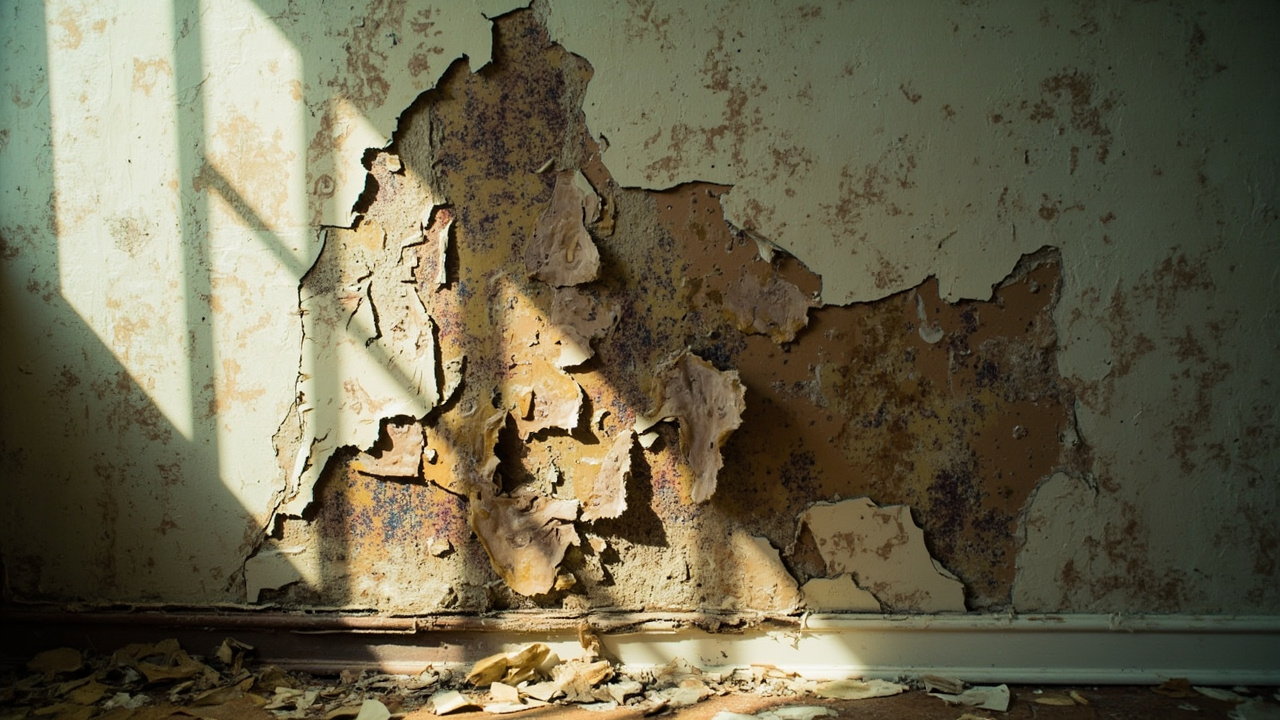
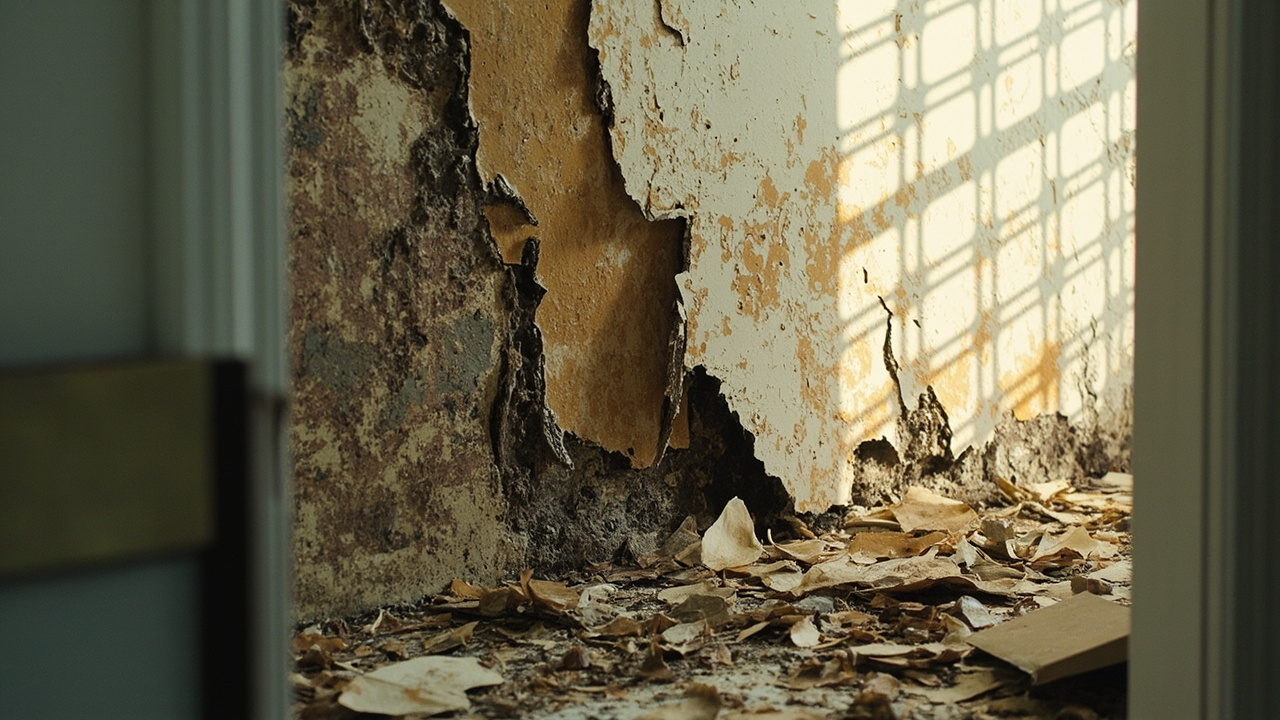
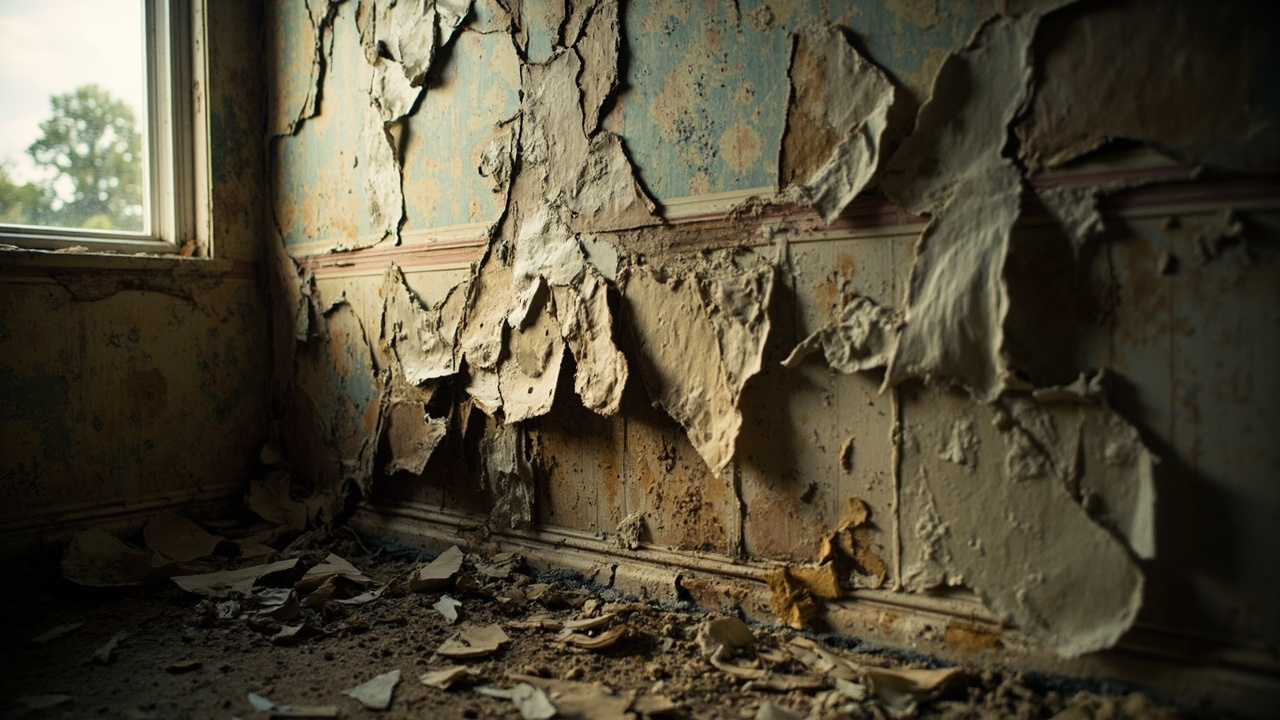
Your walls are telling you something. Bubbling paint, blistering wall paint, and lifting wallpaper are not decorative problems. They are warning signs of active moisture intrusion.

Greenwich's proximity to Long Island Sound creates a unique challenge. Homes in Riverside, Old Greenwich, and Cos Cob experience elevated humidity levels year-round. When interior moisture combines with poor ventilation, water vapor migrates through drywall and plaster. The result is paint delamination and wallpaper adhesive failure.

Older Greenwich homes built before 1970 often lack proper vapor barriers. Historic properties along Sound Beach Avenue or in the Belle Haven neighborhood were constructed with materials that trap moisture between exterior masonry and interior finishes. When exterior water penetrates through aging mortar joints or compromised flashing, it becomes trapped inside wall cavities.

Flaking paint on ceilings often indicates roof leaks or condensation from poorly insulated attics. Loose wallpaper in bathrooms and kitchens signals inadequate exhaust ventilation. Blistering wall paint on exterior walls points to failed window seals or deteriorated siding caulking.

You cannot paint over these problems. The moisture source must be identified and eliminated first. Otherwise, the damage will reappear within months, often worse than before. The longer water sits inside your walls, the more extensive the structural damage becomes. Mold colonization typically begins within 48 hours of sustained moisture exposure.

Why Greenwich Homes Experience Chronic Paint and Wallpaper Failure
How We Identify and Eliminate the Water Source Behind Wall Damage

How We Identify and Eliminate the Water Source Behind Wall Damage

Surface repairs fail because they ignore the root cause. Liberty Water Damage Restoration Riverside uses diagnostic moisture mapping to locate hidden water intrusion before any cosmetic work begins.

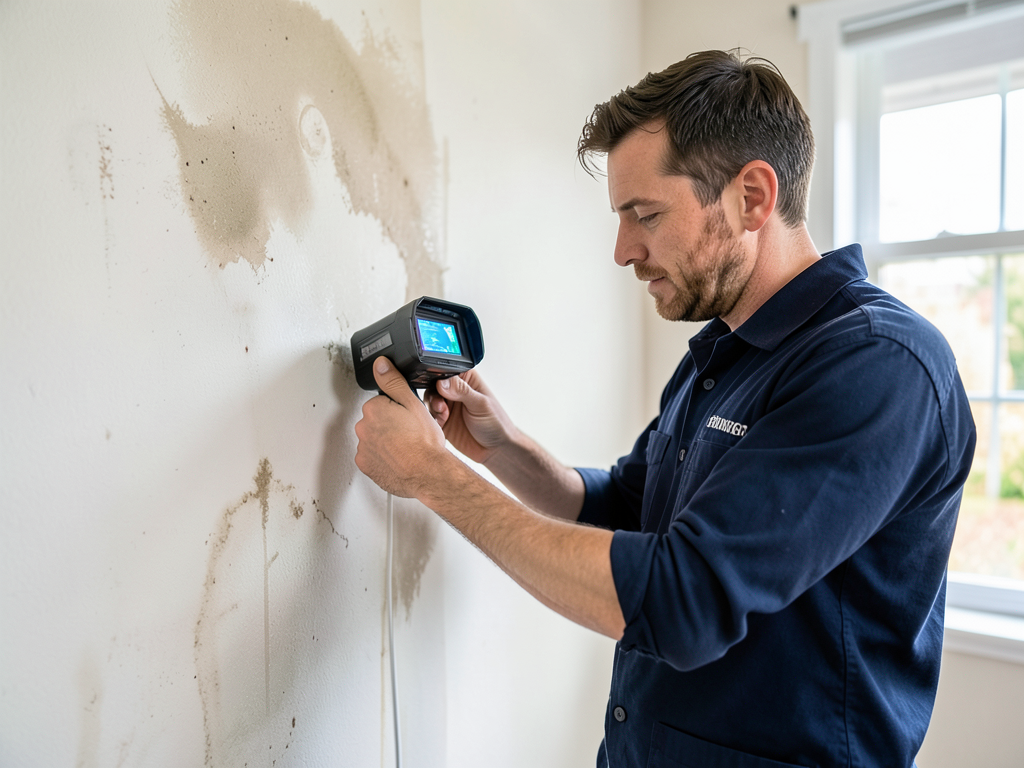
We deploy thermal imaging cameras to identify temperature differentials in wall assemblies. Wet building materials show distinct thermal signatures invisible to the naked eye. This technology reveals active leaks behind finished surfaces without invasive demolition. We also use calibrated moisture meters to measure water content in drywall, plaster, and framing lumber. Readings above 16 percent indicate conditions favorable for microbial growth.

Our assessment examines the complete building envelope. We inspect roof penetrations, chimney flashing, window rough openings, and foundation grading. In Greenwich's coastal environment, we pay particular attention to salt-air corrosion on metal flashings and fasteners. We trace condensation patterns from HVAC systems, plumbing fixtures, and appliance connections.

Once we identify the moisture source, we implement targeted containment and extraction. For acute water damage, we use industrial dehumidifiers and air movers to restore proper vapor pressure differentials. For chronic humidity issues, we recommend ventilation upgrades or vapor barrier installation.

We document pre-existing moisture damage for insurance claims when applicable. Our reports include moisture readings, photographic evidence, and thermal images. This documentation establishes the scope of covered water damage and prevents claim denials.

Only after complete structural drying do we proceed with surface restoration. This ensures your paint and wallpaper will not fail again.

What Happens When We Investigate Your Wall Damage

Peeling Paint & Wallpaper in Greenwich – Expert Diagnosis & Hidden Water Damage Detection
01

Comprehensive Moisture Assessment

We begin with non-invasive moisture scanning of affected walls, adjacent areas, and structural components. Thermal imaging reveals hidden water patterns while moisture meters quantify saturation levels in building materials. We map every moisture source from roof leaks to plumbing failures to groundwater intrusion. You receive a detailed diagram showing exactly where water is entering and accumulating inside your walls.
02

Source Elimination & Structural Drying

After identifying all water sources, we implement containment barriers and extraction protocols. Industrial dehumidifiers establish controlled drying environments while air movers increase evaporation rates. We monitor drying progress with daily moisture readings until all building materials reach equilibrium moisture content. This phase typically requires three to seven days depending on saturation extent and material types affected throughout your Greenwich property.
03

Surface Restoration & Prevention

Once structural drying is verified complete, we address damaged surfaces. Compromised drywall is replaced, plaster is repaired, and all finishes are restored to pre-loss condition. We apply mold-resistant primers before final paint application. For chronic humidity issues, we provide ventilation recommendations and moisture barrier solutions that prevent recurrence. Your walls are protected against future bubbling paint and lifting wallpaper.

Why Greenwich Homeowners Choose Liberty Water Damage Restoration Riverside

Greenwich homes require specific expertise. Properties along the coast face salt-air corrosion and elevated humidity. Historic homes in the Mid-Country neighborhoods have unique construction methods that demand specialized restoration approaches. You need a water damage team that understands these local conditions.

Liberty Water Damage Restoration Riverside has worked extensively throughout Fairfield County. We understand how Greenwich's mixed housing stock responds to moisture exposure. Colonial-era homes with horsehair plaster require different treatment than 1960s ranch houses with vapor barrier deficiencies. Waterfront properties face accelerated deterioration that inland homes never experience.

We maintain relationships with local building officials and understand Greenwich's permitting requirements for structural repairs. When wall damage requires opening load-bearing assemblies, we coordinate the necessary inspections and documentation. This prevents compliance issues that can derail renovation projects or complicate property sales.

Our diagnostic approach saves you money. We identify the actual problem rather than guessing at solutions. This prevents repeated repair cycles where cosmetic fixes fail within months because the underlying water source was never addressed. You get permanent solutions instead of temporary patches.

We work directly with your insurance carrier when water damage is covered. Our documentation meets adjuster requirements and establishes claim scope. We provide detailed moisture maps, material inventories, and photographic evidence that support your coverage entitlement. This reduces claim disputes and accelerates the restoration timeline.

Our equipment remains onsite until moisture readings confirm complete structural drying. We do not rush the process to move on to the next job. Incomplete drying guarantees future mold growth and finish failure.

What to Expect During Your Wall Damage Investigation

Rapid Response Timeline

We schedule diagnostic assessments within 24 hours of your call. Emergency water damage situations receive immediate dispatch. Our initial investigation takes 60 to 90 minutes depending on the affected area size and complexity. You receive preliminary findings onsite, including moisture source identification and recommended next steps. Formal written reports with thermal images and moisture readings are delivered within 24 hours. This allows you to make informed decisions quickly and prevents water damage from worsening while you wait.

Thorough Diagnostic Process

Our assessment examines the entire moisture pathway from source to symptom. We inspect attics, crawl spaces, exterior building envelope components, and mechanical systems. Thermal imaging reveals temperature anomalies indicating active water intrusion or air leakage. Moisture meters provide quantitative data on material saturation levels. We test adjacent areas that show no visible damage to determine the full extent of moisture migration. You receive complete documentation including annotated photographs, moisture maps, and equipment readings. This diagnostic thoroughness ensures no hidden damage is overlooked.

Complete Structural Restoration

Our restoration addresses both structural integrity and aesthetic appearance. Water-damaged framing is evaluated for strength loss and replaced when necessary. Compromised insulation is removed and reinstalled after drying. Drywall and plaster repairs match existing textures and profiles. We use mold-resistant materials in areas prone to moisture exposure. Final paint application uses premium moisture-cured primers and topcoats designed for coastal environments. Your walls are restored to original condition with improved resistance to future moisture damage. All work areas are left clean and ready for occupancy.

Ongoing Moisture Monitoring

After restoration completion, we provide recommendations for moisture prevention and monitoring. This includes guidance on proper ventilation practices, dehumidifier usage, and early warning signs of recurrent water intrusion. For properties with chronic moisture challenges, we offer annual moisture audits to detect problems before visible damage occurs. These preventive inspections identify failed caulking, deteriorated flashing, or ventilation deficiencies while repairs remain minor and inexpensive. You gain peace of mind knowing your Greenwich home is protected against the humidity and water intrusion that cause bubbling paint and lifting wallpaper.

Frequently Asked Questions

You Have Questions,
We Have Answers

Why is my paint peeling off the wall like wallpaper? +

Paint peeling in large sheets indicates a bonding failure between layers. This happens when moisture gets trapped behind the paint film, often from water damage, plumbing leaks, or high humidity. In Greenwich homes, particularly older properties near the Long Island Sound, moisture intrusion through foundation walls or roof leaks is common. The paint loses adhesion to the substrate and lifts off in chunks. This is different from normal weathering. You need to identify and fix the moisture source first, then remove all loose paint, dry the surface completely, and reprime before repainting.

What to do if paint is peeling off the wall? +

Stop and identify the moisture source first. Check for roof leaks, plumbing issues, or condensation problems. In Greenwich, coastal humidity and seasonal temperature swings worsen paint failure. Scrape away all loose, peeling paint down to bare substrate or sound paint. Let the area dry completely for several days. Sand the edges smooth to feather transitions. Apply a moisture-blocking primer designed for your substrate. Then repaint with quality exterior or interior paint appropriate for the location. Skipping the moisture fix guarantees the problem returns within months.

Is it cheaper to paint or peel and stick wallpaper? +

Painting is cheaper upfront but requires proper prep work. Quality interior paint costs less per square foot than peel-and-stick wallpaper. However, if your walls have moisture damage causing the peeling, neither option works until you fix the source. Peel-and-stick wallpaper will fail just like paint if applied over damp surfaces. For Greenwich homes with historic plaster walls or moisture issues, paint offers better breathability and longevity after proper repairs. Factor in prep costs like scraping, priming, and drying time. The cheapest option is the one that addresses the root problem.

Can I just paint over peeling paint? +

No. Painting over peeling paint traps the problem and wastes money. The new coat will peel off with the old layer within weeks or months. You must remove all loose, flaking paint first. Peeling indicates a bonding failure or moisture issue that new paint cannot fix. Scrape down to sound substrate, address any water damage, prime bare spots, and then repaint. In Greenwich properties, especially those with older construction or foundation moisture issues, shortcuts create bigger repair bills later. Do it right the first time.

Will Kilz stop peeling paint? +

Kilz primer will not stop paint from peeling if moisture or bonding issues exist. Primer creates a uniform surface for topcoats but cannot reverse existing adhesion failure. You must scrape off all peeling paint first, fix the moisture source, and let surfaces dry completely. Then Kilz or similar primers work well to seal bare surfaces and improve topcoat adhesion. In Greenwich homes with water damage history, use a moisture-blocking primer specifically rated for your substrate type. Primer is one step in the repair process, not a magic solution.

Should I scrape off all the peeling paint? +

Yes. Remove all loose, peeling paint down to sound substrate or stable paint layers. Peeling paint indicates adhesion failure that will spread under new coats. Use a scraper or wire brush to test surrounding areas. If paint lifts easily, it needs removal. In Greenwich properties with plaster walls or exterior wood trim, feather the edges where old paint meets bare substrate using sandpaper. This creates smooth transitions for new coats. Leaving peeling paint guarantees premature failure of your repair. Take the time to scrape thoroughly before priming.

What is the difference between flaking and peeling paint? +

Flaking is surface-level deterioration where small chips or scales break away from the paint film, often due to UV exposure or poor-quality paint. Peeling involves entire layers lifting off the substrate in larger sheets, caused by moisture intrusion or adhesion failure between coats. In Greenwich, coastal salt air and humidity cause both conditions but through different mechanisms. Flaking requires surface prep and recoating. Peeling demands moisture investigation, complete removal of loose material, substrate drying, and proper priming. Misdiagnosing the issue leads to repair failure.

Can you put primer over peeling paint? +

No. Primer needs a sound substrate to bond properly. Applying primer over peeling paint simply creates another layer that will fail. The peeling continues underneath, taking your new primer and topcoats with it. Scrape off all loose paint first, down to bare substrate or stable layers. Sand edges smooth. Let moisture-damaged areas dry completely. Then apply primer to bare spots and feather into sound paint. In Greenwich homes, especially those with water damage history, proper surface prep determines whether your repair lasts months or years.

How to fix flaking peeling paint? +

Identify and eliminate the moisture source first. Scrape away all loose, flaking paint using a putty knife or wire brush. Check surrounding areas for hidden damage. Sand edges to create smooth transitions. Let the surface dry completely for several days. Apply a quality primer suited to your substrate, whether plaster, drywall, or wood. Repaint with appropriate interior or exterior paint. In Greenwich properties with humidity issues or water damage, consider adding ventilation or addressing drainage problems. Fixing symptoms without addressing causes wastes time and money.

What is the cost of painting a 1000 sq ft house? +

Costs vary widely based on prep work needed, paint quality, ceiling height, and surface condition. For a 1000 square foot house in Greenwich, expect higher rates than state averages due to local labor costs and the prevalence of historic homes requiring specialized prep. Homes with peeling paint need extensive scraping, priming, and moisture remediation before painting, which increases total costs significantly. Get multiple detailed estimates that specify prep work, primer type, paint brand, and number of coats. Cheap bids often skip critical prep steps.

How Greenwich's Coastal Climate Accelerates Paint and Wallpaper Deterioration

Greenwich's location on Long Island Sound creates year-round humidity levels that exceed interior comfort standards. Summer dew points regularly reach 65 to 70 degrees, creating condensation conditions on cool interior surfaces. Salt-laden air accelerates corrosion of metal flashings, window frames, and fasteners. This creates additional water entry points that worsen over time. Homes within two miles of the coastline experience accelerated deterioration compared to inland properties. The combination of elevated humidity and compromised building envelope components creates ideal conditions for blistering wall paint and loose wallpaper throughout Riverside and Old Greenwich neighborhoods.

Liberty Water Damage Restoration Riverside understands the specific building challenges facing Greenwich properties. We recognize how historic construction methods interact with modern HVAC systems to create unintended moisture problems. Our familiarity with local building officials expedites permit approvals for structural repairs when needed. We maintain relationships with Greenwich contractors, insurance adjusters, and property managers who trust our diagnostic accuracy. When you choose a local water damage specialist rather than a regional franchise, you benefit from accumulated knowledge about how Greenwich homes fail and how to fix them permanently.

Water Damage Restoration Services in The Greenwich Area

Our service area is designed to cover the entire region, ensuring that no matter where you are, we can get to you quickly and efficiently. We invite you to view our location on the map and see our central hub, from which we dispatch our rapid response teams. We are committed to serving our local community with speed, expertise, and a dedication to quality that you can always rely on.

Address:
Heritage Water Damage Restoration Greenwich, 145 Mason St, Greenwich, CT, 06830

Additional Services We Offer

Our news updates

Latest Articles & News from The Blogs

Understanding the difference between rain damage and storm surge in Lucas Point Storm surges push saltwater inland at high speeds…

Understanding the difference between rain damage and storm surge in Lucas Point

Understanding the difference between rain damage and storm surge in Lucas Point Storm surges push saltwater inland at high speeds…

Salvaging designer wallpaper after a minor water leak in your Greenwich dining room

Salvaging Designer Wallpaper After a Minor Water Leak in Your Greenwich Dining Room When water seeps behind your designer wallpaper,…

Why you should never touch the standing water in your flooded basement yourself

Why you should never touch the standing water in your flooded basement yourself Standing water in your Greenwich basement is…

Contact Us

Your peeling paint and lifting wallpaper will not fix themselves. Every day you wait allows more moisture damage to accumulate inside your walls. Call Liberty Water Damage Restoration Riverside at (475) 320-3777 now for a comprehensive moisture assessment. We identify the real problem and provide permanent solutions for your Greenwich home.