
What happens when the heavy snow on your Greenwich roof starts to melt too fast
When heavy snow melts too quickly on your Greenwich roof, the resulting water can back up under shingles and flashings, flooding your attic and interior walls before you even notice. This rapid melt creates a sudden surge of water that overwhelms gutters and flashings designed for normal rainfall. The freeze-thaw cycles common in Fairfield County mean snow that melts during the day refreezes at night, creating ice dams that force water sideways under your roofing materials. Understanding what happens next and how to respond can mean the difference between a quick cleanup and thousands in structural repairs. EPA mold growth guidelines.
Heavy snow on a Greenwich roof presents a unique risk during rapid melt events. Unlike a steady rain that drains predictably, melting snow creates concentrated water flow that exploits even minor roofing vulnerabilities. The water follows the path of least resistance, which often means traveling under shingles, through nail holes, or around improperly sealed flashings. Once inside, this water saturates insulation, drips through ceilings, and seeps into wall cavities where it remains hidden until significant damage occurs. The longer this moisture stays trapped, the greater the risk of mold growth, which can begin within 24-48 hours according to EPA guidelines. Emergency Water Damage Restoration for Old Greenwich Coastal Homes.
The science behind rapid snow melt roof leaks

Diagram showing how ice dams form at roof edges and force water under shingles during rapid snow melt Water Damage Restoration Meriden.
Rapid snow melt creates conditions that differ dramatically from normal rainfall. When temperatures rise quickly, the snow closest to your roof surface melts first due to heat transfer from your attic. This creates a layer of water between the snow and your roof deck. If your attic lacks proper insulation or ventilation, this process accelerates, generating more water than your roof system can handle. The water flows downward until it hits the colder roof edge where it refreezes, forming an ice dam. This dam acts like a barrier, trapping water behind it and forcing it to find alternative paths, often under your shingles and into your home.. Read more about Disclosing past water damage when selling your home in the Greenwich real estate market.
The freeze-thaw cycle in Greenwich exacerbates this problem. During a typical winter storm followed by a warm spell, snow melts during daylight hours and refreezes at night. Each cycle adds another layer to the ice dam while creating more water pressure against your roofing materials. The weight of accumulated snow also stresses your roof structure, potentially creating gaps where water can enter. According to the Connecticut State Building Code, roofs in Fairfield County should be designed to handle specific snow load requirements, but even properly constructed roofs can fail when faced with the volume of water produced by rapid snow melt.
Emergency steps when you discover a snow melt leak
Professional using thermal imaging camera to detect moisture behind walls after a snow melt leak Professional Sewage Backup Cleanup and Sanitization for Cos Cob Residents.
When you first notice water stains on your ceiling or walls during a snow melt event, immediate action can prevent further damage. First, move furniture and valuables away from the affected area. Place buckets or containers under active drips to catch water and prevent it from spreading. If water is pooling on the floor, use towels or a wet vacuum to remove it promptly. Most importantly, if water is near electrical fixtures or outlets, turn off power to that area at your circuit breaker to prevent electrical hazards.
Document everything with photos and videos before beginning cleanup. This documentation proves invaluable for insurance claims and helps restoration professionals understand the extent of damage. Contact a professional water damage restoration company immediately rather than attempting extensive repairs yourself. The water you see is often just a fraction of the moisture present in your walls, ceiling, and flooring. Professional moisture detection equipment can identify hidden water that would otherwise lead to mold growth and structural deterioration. Fast Burst Pipe Repair and Water Extraction in Mid-Country Greenwich.
According to IICRC S500 standards for professional water damage restoration, the first 24-48 hours are critical for preventing secondary damage. During this window, water can wick into porous materials, and mold spores can begin colonizing damp surfaces. A professional restoration team can begin structural drying within hours of your call, significantly reducing the risk of long-term damage and health hazards. IICRC S500 water damage restoration standards.
Hidden dangers beyond the visible drip
The water that appears on your ceiling represents only the beginning of potential damage. As snow melt water travels through your home, it follows paths you cannot see. Water can travel along roof rafters, through wall cavities, and across ceiling joists before finding a point to drip through. This means the actual source of the leak may be 10-20 feet away from where you first notice water. The moisture can saturate insulation, reducing its R-value and creating an environment conducive to mold growth within wall cavities. Finding a Reliable Mold Remediation Specialist Near Riverside CT.
Structural components absorb water at different rates. Drywall can wick moisture upward several feet beyond the visible water line, while wooden studs and joists can retain moisture for weeks if not properly dried. This retained moisture creates the perfect environment for mold colonies to establish themselves. The EPA reports that certain mold species can begin growing on damp surfaces within 24-48 hours, and once established, mold can spread rapidly through your home’s air handling system.
Beyond mold, prolonged moisture exposure can compromise your home’s structural integrity. Water can cause wood to swell, warp, or rot. Metal fasteners can corrode, and adhesives in manufactured building materials can break down. The cost of addressing these issues grows exponentially the longer moisture remains present. Professional moisture mapping using thermal imaging and moisture meters can identify all affected areas, not just those where water has become visible.
Our professional snow melt water damage restoration process
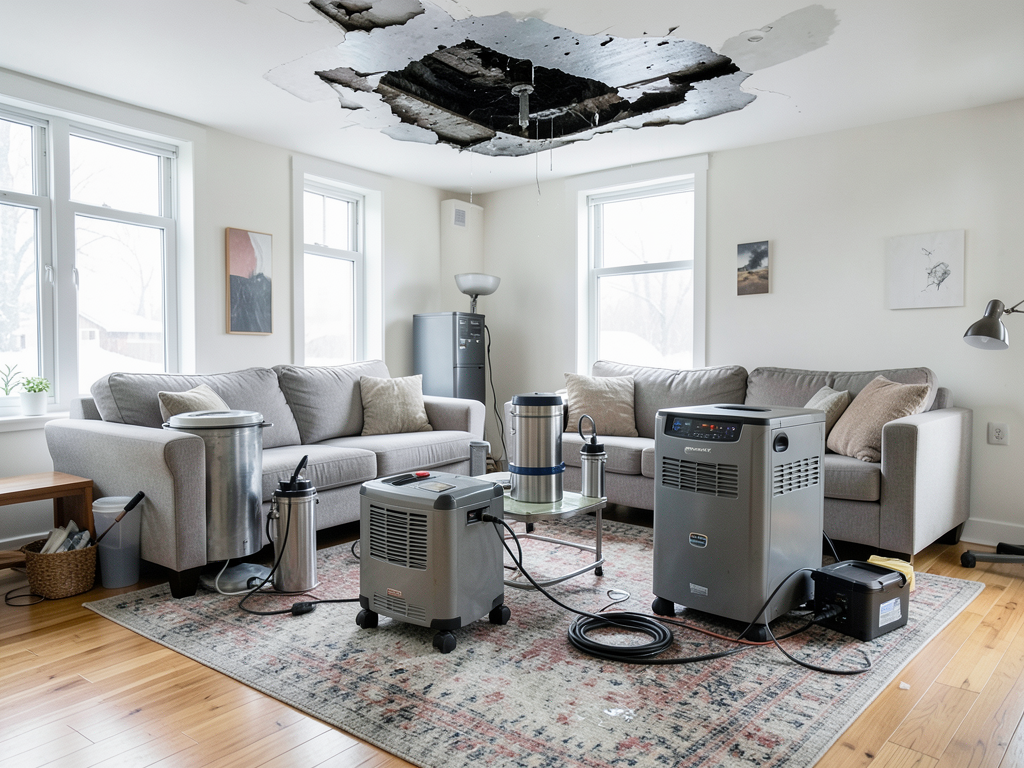
Industrial dehumidifiers and air movers set up for structural drying after a snow melt roof leak
When you call for professional help, our restoration process follows industry-standard protocols to ensure complete moisture removal and prevent secondary damage. We begin with a comprehensive assessment using moisture meters, thermal imaging cameras, and hygrometers to map the extent of water migration. This diagnostic phase identifies all affected materials, even those hidden behind walls or under flooring.. Read more about Managing a restoration project in your Cos Cob home while you have live-in staff.
Water extraction follows immediately if standing water is present. We use truck-mounted extraction units capable of removing hundreds of gallons per hour. For water trapped in carpets or padding, we employ weighted extraction tools that compress the material while simultaneously removing water. This step alone can remove up to 95% of the water present, significantly reducing drying time.
Structural drying involves strategically placing industrial air movers and dehumidifiers to create optimal drying conditions. We calculate the exact number and placement of equipment based on the volume of air in your home and the materials affected. Dehumidifiers remove moisture from the air while air movers create circulation that pulls moisture from wet materials. We monitor the drying process daily using moisture meters, adjusting equipment placement as materials dry at different rates.
Content manipulation protects your belongings during the restoration process. We move furniture to dry areas, place furniture blocks under legs to prevent staining, and remove items that could be damaged by high-velocity air movement. For valuable or irreplaceable items, we offer specialized drying chambers that provide controlled drying environments.
Why Greenwich architecture faces unique snow melt challenges
Greenwich’s mix of historic and modern architecture creates specific vulnerabilities to snow melt damage. Many older homes in areas like Old Greenwich and Riverside feature complex roof designs with multiple valleys, dormers, and intersecting planes. These architectural elements create numerous points where ice dams can form and water can back up. The fieldstone and brick foundations common in historic Greenwich homes can also allow moisture to migrate from saturated soil into basements during rapid snow melt events.
Modern luxury homes in Back Country and Belle Haven often feature finished basements and complex mechanical systems. When snow melt water enters these spaces, it can damage expensive finishes, electronic equipment, and mechanical systems. The high value of these properties makes professional restoration not just a matter of property protection but also of preserving significant financial investments.
The freeze-thaw cycles specific to coastal Fairfield County mean that even well-maintained roofs can develop vulnerabilities over time. Temperature fluctuations cause building materials to expand and contract, potentially creating gaps in flashing, sealants, and roofing materials. Annual inspections can identify these developing issues before they become major problems during the next snow melt event.
Preventing future snow melt damage
While you cannot control when snow melts, you can take steps to minimize your risk of water damage. Proper attic insulation and ventilation are your first line of defense against ice dams. The U.S. Department of Energy recommends attic insulation levels of R-49 to R-60 for Connecticut homes. This insulation keeps your roof cold, preventing the underside snow melt that leads to ice dam formation. Soffit and ridge vents work together to create airflow that maintains consistent roof temperatures.
Roof raking after heavy snowfalls can prevent ice dams from forming. Using a roof rake with a long extension handle, you can safely remove snow from the lower three to four feet of your roof while standing on the ground. This eliminates the area where ice dams typically form. However, never attempt to remove all snow from your roof, as this can damage roofing materials and create unsafe conditions.
Professional roof inspections before winter can identify and address vulnerabilities. Inspectors look for damaged flashing, missing shingles, deteriorated sealants, and other issues that could allow water entry during snow melt. They also check attic ventilation and insulation levels, recommending improvements that can prevent future problems. According to the National Roofing Contractors Association, annual roof inspections can extend your roof’s life by 5-10 years while preventing costly water damage.
Insurance considerations for snow melt damage
Most standard homeowner’s insurance policies cover sudden and accidental water damage from snow melt, but coverage details vary significantly. Damage from ice dams and rapid snow melt is typically covered, while damage from gradual water intrusion or poor maintenance is often excluded. Document all damage thoroughly with photos and videos before beginning cleanup, as this documentation is crucial for insurance claims.
Many insurance companies require that you take reasonable steps to prevent further damage after discovering a leak. This means you must arrange for professional water removal and drying services promptly. Failure to mitigate damage can result in claim denial for secondary damage that could have been prevented. Keep all receipts for emergency services, as these are often reimbursable under your policy.
Professional restoration companies can assist with the insurance process by providing detailed damage assessments, moisture mapping reports, and itemized estimates for repairs. We can communicate directly with your insurance adjuster to ensure all damage is properly documented and covered. Our experience with hundreds of similar claims means we understand what insurance companies require for approval.. Read more about How to choose between a sump pump repair and a full replacement for your Glenville basement.
Frequently Asked Questions
How quickly should I call for help after discovering a snow melt leak?
Call immediately. The first 24-48 hours are critical for preventing mold growth and secondary damage. Professional restoration teams can typically arrive within 2-4 hours of your call and begin emergency water extraction within the first hour on-site.
Can I use my home insurance for snow melt water damage?
Yes, most standard policies cover sudden water damage from snow melt and ice dams. However, damage from poor maintenance or gradual water intrusion is often excluded. Document everything and contact your insurance company promptly after discovering damage.
How long does the restoration process take after a snow melt leak?
The timeline varies based on damage extent. Water extraction and initial drying typically take 3-5 days. Complete restoration, including repairs and finishing work, can take 2-6 weeks depending on the scope of damage and material availability.
Should I try to remove the snow from my roof myself?
Roof raking from the ground to remove the lower 3-4 feet of snow can help prevent ice dams, but never climb onto your roof or attempt to remove all snow. Professional snow removal services have the equipment and training to safely clear roofs without causing damage.
What are the signs that water has spread beyond the visible area?
Musty odors, peeling paint, bubbling wallpaper, and water stains that appear to grow overnight all indicate water has spread beyond the visible area. Professional moisture detection equipment can identify hidden water in walls, ceilings, and floors before secondary damage occurs.
Take action before the next storm hits
Don’t wait for the next snow melt to discover water damage in your Greenwich home. The combination of rapid temperature changes and accumulated snow creates a perfect storm for roof leaks and interior flooding. Whether you’ve already experienced damage or want to prevent future problems, professional assessment and preparation can save you thousands in repairs and protect your family’s health.
Heritage Water Damage Restoration Greenwich provides 24/7 emergency response for snow melt water damage throughout Fairfield County. Our certified technicians arrive within hours with industrial-grade equipment to extract water, dry structures, and prevent mold growth. We work directly with your insurance company to ensure complete coverage and provide detailed documentation for your claim.
Call (475) 320-3777 today to schedule your inspection or request emergency service. Don’t let hidden moisture compromise your home’s structure and your family’s health. Our team is standing by to respond to your call and begin protecting your property immediately. The longer you wait, the more extensive and expensive the damage becomes.
Pick up the phone and call (475) 320-3777 before the next storm hits. Your home deserves professional protection, and your family deserves peace of mind knowing that expert help is just one call away.
You may also find this helpful. How to tell if your skylight is leaking or just producing heavy condensation.
{
“@context”: “https://schema.org”,
“@type”: “BlogPosting”,
“headline”: “What happens when the heavy snow on your Greenwich roof starts to melt too fast”,
“description”: “When heavy snow melts too fast on your Greenwich roof, water backs up under shingles and floods your home. Learn the emergency steps and professional restoration process.”,
“wordCount”: 2312,
“datePublished”: “2026-04-15T12:48:00.000Z”,
“dateModified”: “2026-04-15T12:48:00.000Z”,
“inLanguage”: “en-US”,
“mainEntityOfPage”: {
“@type”: “WebPage”,
“@id”: “https://heritagewaterdamagerestorationgreenwich.com”
},
“publisher”: {
“@type”: “LocalBusiness”,
“name”: “Heritage Water Damage Restoration Greenwich”,
“url”: “https://heritagewaterdamagerestorationgreenwich.com”
},
“author”: {
“@type”: “Organization”,
“name”: “Heritage Water Damage Restoration Greenwich”,
“url”: “https://heritagewaterdamagerestorationgreenwich.com”
},
“image”: {
“@type”: “ImageObject”,
“url”: “https://heritagewaterdamagerestorationgreenwich.com/wp-content/uploads/2026/03/what-happens-when-the-heavy-snow-on-your-greenwich-1.png”
}
}
{
“@context”: “https://schema.org”,
“@type”: “LocalBusiness”,
“name”: “Heritage Water Damage Restoration Greenwich”,
“url”: “https://heritagewaterdamagerestorationgreenwich.com”,
“address”: {
“@type”: “PostalAddress”,
“addressLocality”: “Greenwich”
},
“areaServed”: {
“@type”: “City”,
“name”: “Greenwich”
}
}
{
“@context”: “https://schema.org”,
“@type”: “FAQPage”,
“mainEntity”: [
{
“@type”: “Question”,
“name”: “How quickly should I call for help after discovering a snow melt leak?”,
“acceptedAnswer”: {
“@type”: “Answer”,
“text”: “Call immediately. The first 24-48 hours are critical for preventing mold growth and secondary damage. Professional restoration teams can typically arrive within 2-4 hours of your call and begin emergency water extraction within the first hour on-site.”
}
},
{
“@type”: “Question”,
“name”: “Can I use my home insurance for snow melt water damage?”,
“acceptedAnswer”: {
“@type”: “Answer”,
“text”: “Yes, most standard policies cover sudden water damage from snow melt and ice dams. However, damage from poor maintenance or gradual water intrusion is often excluded. Document everything and contact your insurance company promptly after discovering damage.”
}
},
{
“@type”: “Question”,
“name”: “How long does the restoration process take after a snow melt leak?”,
“acceptedAnswer”: {
“@type”: “Answer”,
“text”: “The timeline varies based on damage extent. Water extraction and initial drying typically take 3-5 days. Complete restoration, including repairs and finishing work, can take 2-6 weeks depending on the scope of damage and material availability.”
}
},
{
“@type”: “Question”,
“name”: “Should I try to remove the snow from my roof myself?”,
“acceptedAnswer”: {
“@type”: “Answer”,
“text”: “Roof raking from the ground to remove the lower 3-4 feet of snow can help prevent ice dams, but never climb onto your roof or attempt to remove all snow. Professional snow removal services have the equipment and training to safely clear roofs without causing damage.”
}
},
{
“@type”: “Question”,
“name”: “What are the signs that water has spread beyond the visible area?”,
“acceptedAnswer”: {
“@type”: “Answer”,
“text”: “Musty odors, peeling paint, bubbling wallpaper, and water stains that appear to grow overnight all indicate water has spread beyond the visible area. Professional moisture detection equipment can identify hidden water in walls, ceilings, and floors before secondary damage occurs.”
}
}
]
}
{
“@context”: “https://schema.org”,
“@type”: “BreadcrumbList”,
“itemListElement”: [
{
“@type”: “ListItem”,
“position”: 1,
“name”: “Home”,
“item”: “https://heritagewaterdamagerestorationgreenwich.com”
},
{
“@type”: “ListItem”,
“position”: 2,
“name”: “Blog”,
“item”: “https://heritagewaterdamagerestorationgreenwich.com/blog”
},
{
“@type”: “ListItem”,
“position”: 3,
“name”: “What happens when the heavy snow on your Greenwich roof starts to melt too fast”
}
]
}
{
“@context”: “https://schema.org”,
“@type”: “Service”,
“serviceType”: “Water Damage Restoration”,
“provider”: {
“@type”: “LocalBusiness”,
“name”: “Heritage Water Damage Restoration Greenwich”,
“url”: “https://heritagewaterdamagerestorationgreenwich.com”
},
“areaServed”: {
“@type”: “City”,
“name”: “Greenwich”
},
“description”: “When heavy snow melts too fast on your Greenwich roof, water backs up under shingles and floods your home. Learn the emergency steps and professional restoration process.”
}