
That slow drip behind your fridge could be destroying your Greenwich kitchen subfloor
Water damage often starts with something you cannot see. A slow drip from a cracked ice maker line behind your refrigerator can soak the subfloor for weeks before you notice. By the time you see a stain or feel a soft spot, the wood may already be rotting. In Greenwich homes with hardwood floors and custom cabinetry, this hidden moisture can lead to mold growth and expensive repairs. Acting fast can save your kitchen and your health. EPA mold information.
Subfloors in older Greenwich homes often sit on crawl spaces or basements with poor airflow. This makes it harder for moisture to dry naturally. If the leak continues, the wood can warp, weaken, and become a breeding ground for mold. Professional drying equipment and moisture testing can stop the damage before it spreads. Professional Sewage Backup Cleanup and Sanitization for Cos Cob Residents.
If you notice a musty smell near your fridge, a soft spot in the floor, or water pooling under the appliance, shut off the water supply immediately. Then call a certified water damage restoration team. In Greenwich, rapid response can mean the difference between a quick repair and a full kitchen renovation. Emergency Water Damage Restoration for Old Greenwich Coastal Homes.
Common signs of a refrigerator water line leak
Many refrigerator leaks start with a small crack in the plastic supply line or a loose connection at the wall valve. These leaks can release just a few drops per minute, but over time that adds up to gallons of water absorbed into the subfloor. The damage is often hidden behind the fridge or under cabinets where you cannot see it. Water Damage Restoration Meriden.
Watch for these warning signs:
- Musty or earthy odor near the refrigerator
- Discoloration or bubbling on the floor near the appliance
- Cupping or crowning of hardwood planks
- Soft spots when you press on the floor
- Water stains on the ceiling below the kitchen
In Greenwich homes with finished basements, a slow leak can travel through the subfloor and cause stains or sagging on the ceiling below. This secondary damage is often the first clue that something is wrong upstairs. Basement Waterproofing Guide.
Why Greenwich kitchens are at higher risk
Many Greenwich homes were built before modern moisture barriers were standard. Older homes in areas like Old Greenwich and Riverside often have crawl spaces with dirt floors that trap humidity. When a slow leak adds more moisture, the environment becomes perfect for mold and wood rot.. Read more about Who should be checking on your Greenwich property for leaks while you are traveling?.
High-end kitchens in Greenwich often feature wide-plank hardwood or natural stone floors. These materials are more sensitive to moisture than standard laminate or vinyl. A slow leak can cause hardwood to cup or crown within days, and stone tiles can loosen as the adhesive breaks down.
Local building codes in Fairfield County require proper drainage and vapor barriers in new construction, but many older homes do not meet these standards. If your home was built before the 1980s, it may lack the moisture protection that modern codes require.
According to the IICRC S500 Standard for Professional Water Damage Restoration, Category 1 water from a clean source like a supply line can become Category 2 or 3 if it sits for more than 48 to 72 hours. This means a slow leak can go from a simple repair to a mold remediation job very quickly. IICRC S500 Standard.
Immediate steps to take when you discover a leak
If you find water near your refrigerator, your first goal is to stop the flow and protect your home. Follow these steps to limit the damage:
- Locate the water shutoff valve behind the fridge or under the sink and turn it clockwise to stop the flow.
- Unplug the refrigerator to avoid electrical hazards.
- Remove any standing water with towels or a wet vacuum.
- Move the fridge away from the wall if possible to inspect the line and surrounding area.
- Call a professional water damage restoration team to inspect for hidden moisture.
Do not rely on air drying or household fans. Professional-grade dehumidifiers and air movers can remove moisture from deep in the subfloor that you cannot reach. In Greenwich, local restoration teams often arrive within an hour to begin the drying process.. Read more about Why you cannot simply mop up a flood on your Greenwich marble or limestone floors.
Professional restoration process for kitchen subfloor damage
Water damage restoration is more than just cleaning up visible water. Certified technicians use specialized tools to find and remove moisture that you cannot see. Here is what the process typically includes:
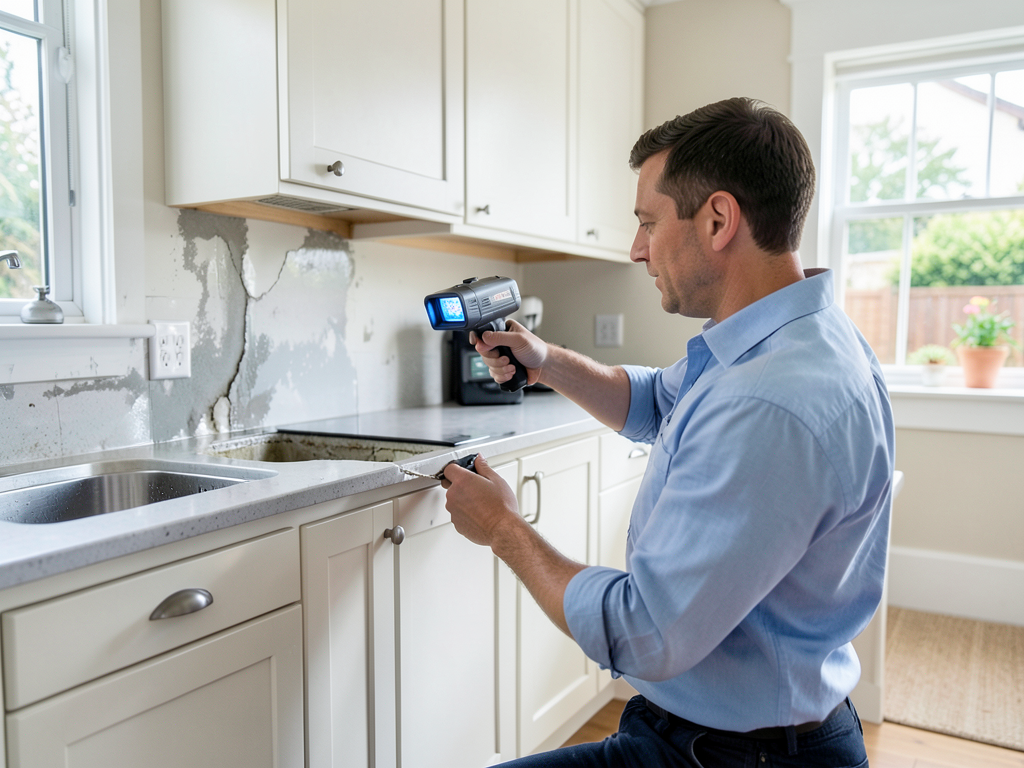
- Moisture Inspection: Technicians use thermal imaging cameras and moisture meters to locate wet areas behind cabinets and under flooring.
- Water Extraction: Industrial vacuums remove standing water and surface moisture.
- Structural Drying: High-powered air movers and dehumidifiers are placed to dry the subfloor, joists, and surrounding materials.
- Antimicrobial Treatment: EPA-registered disinfectants are applied to prevent mold growth.
- Final Testing: Moisture levels are checked again to confirm the area is dry before repairs begin.
In Greenwich, many restoration teams use desiccant dehumidifiers for hardwood floors because they remove moisture without raising the wood’s temperature, which can cause further warping.
Understanding subfloor materials and their vulnerabilities
Subfloors in Greenwich homes are often made of plywood or oriented strand board (OSB). Both materials absorb water quickly and swell, which can cause the floor to feel spongy or uneven. If the subfloor stays wet for more than a few days, it can lose structural strength and begin to rot.
Older homes may have plank subfloors, which are even more vulnerable to water damage. These boards can cup, split, or develop mold on the underside where you cannot see it. In some cases, the only way to confirm the damage is to remove a section of flooring for inspection.
Underlayment materials like particleboard can also break down when wet. These materials are often used under vinyl or tile and can disintegrate, leaving the floor unstable. If you notice a soft spot or bounce when walking near your fridge, the underlayment may already be compromised.
Professional moisture testing can determine whether the subfloor can be saved or if it needs replacement. In many cases, targeted drying can restore the material without the cost of a full replacement.
The hidden danger of mold growth
Mold can begin to grow within 24 to 48 hours of water exposure. In a dark, humid space like under a kitchen cabinet, mold spores can multiply quickly. Once mold takes hold, it can spread to drywall, insulation, and even the framing of your home.
Common signs of mold include:
- Musty odors that do not go away
- Allergic reactions like sneezing or itchy eyes when in the kitchen
- Visible black or green spots on walls or floors
- Peeling paint or bubbling wallpaper near the floor
In Greenwich, where many homes have finished basements or crawl spaces, mold can also spread downward. If you notice a musty smell in the basement directly below the kitchen, it could be a sign of hidden mold growth above.
Professional mold remediation follows strict guidelines from the IICRC S520 Standard. This includes containment, air filtration, and safe removal of contaminated materials. Simply cleaning visible mold is not enough; the source of moisture must be eliminated to prevent regrowth.
Insurance claims for refrigerator water damage
Most homeowners insurance policies cover sudden and accidental water damage, but they may not cover damage from a slow leak that developed over time. Insurance companies often view long-term leaks as maintenance issues, which are not covered.. Read more about Why your home insurance might not cover every type of water damage.
To improve your chances of a successful claim:
- Document the damage with photos and videos as soon as you discover it.
- Keep receipts for any emergency repairs or water removal services.
- Request a written report from your restoration team that explains the cause and extent of the damage.
In Greenwich, many restoration companies work directly with insurance carriers to streamline the claims process. They can provide the documentation and estimates that insurers require, which can speed up approval and payment.
If your claim is denied, you may still be able to recover costs through a home warranty or by filing a complaint with your state insurance department. Always review your policy carefully and ask your agent about coverage for appliance-related leaks.
Preventing future refrigerator leaks
Once your kitchen is dry and repaired, take steps to prevent future leaks. Simple maintenance can save you from another round of water damage:
- Inspect the water supply line every six months for cracks or wear.
- Replace plastic lines with braided stainless steel, which is more durable.
- Check the connection at the wall valve and tighten if needed.
- Install a water alarm behind the fridge to alert you to leaks early.
- Have your ice maker solenoid valve tested annually for proper function.
In Greenwich, where many homes have high-end appliances, consider having a plumber inspect your water lines during routine maintenance. A small investment in prevention can save thousands in repairs. Fast Burst Pipe Repair and Water Extraction in Mid-Country Greenwich.
If you are remodeling your kitchen, ask your contractor about moisture barriers and water-resistant subfloor materials. These upgrades can provide extra protection in case of future leaks.
Why professional help is worth the cost
DIY water removal often leaves moisture behind. A shop vac or household fan cannot reach the deep pockets of water that collect under cabinets or between floor layers. This trapped moisture can cause problems for weeks or months after the visible water is gone.
Professional restoration teams use tools like:
- Thermal imaging cameras to find hidden wet spots
- Moisture meters to measure water content in wood and drywall
- Desiccant dehumidifiers for deep drying
- Air scrubbers to remove mold spores and odors
In Greenwich, where many homes have custom finishes and historic details, professional care is especially important. Restoration experts know how to protect delicate materials while still removing all moisture. This can mean the difference between saving your floors and having to replace them.
Call (475) 320-3777 today to schedule your inspection. Our certified team will arrive quickly to assess the damage and begin the drying process. Do not wait until a small drip becomes a major repair.
Frequently Asked Questions
How long does it take for a slow leak to cause serious damage?
Even a small leak can cause serious damage in as little as 24 to 48 hours. Wood subfloors can absorb moisture quickly, leading to warping, mold growth, and structural weakness.
Can I dry the subfloor myself with fans and dehumidifiers?
Household fans and dehumidifiers are not powerful enough to remove moisture from deep in the subfloor. Professional-grade equipment is needed to dry the area completely and prevent mold growth.
Will my insurance cover the cost of repairs?
Insurance may cover sudden and accidental leaks, but not damage from a slow leak that developed over time. Check your policy and document the damage to improve your chances of approval.. Read more about Why your family’s sudden allergies might be linked to a hidden leak in your Cos Cob home.
How can I tell if there is mold under my floor?
Musty odors, soft spots, or discoloration near the fridge are common signs. Professional moisture testing and air quality checks can confirm if mold is present.
What should I do if I find a leak but cannot move the fridge?
Turn off the water supply and unplug the appliance. Then call a professional restoration team. They have the tools to inspect and dry the area without moving heavy appliances.
You may also find this helpful. Why every home on Stanwich Road should have a smart leak detection system installed.
{
“@context”: “https://schema.org”,
“@type”: “BlogPosting”,
“headline”: “That slow drip behind your fridge could be destroying your Greenwich kitchen subfloor”,
“description”: “Discover how a hidden refrigerator leak can rot your Greenwich kitchen subfloor. Learn warning signs, water damage restoration steps, and why professional drying is critical.”,
“wordCount”: 1892,
“datePublished”: “2026-03-29T06:29:00.000Z”,
“dateModified”: “2026-03-29T06:29:00.000Z”,
“inLanguage”: “en-US”,
“mainEntityOfPage”: {
“@type”: “WebPage”,
“@id”: “https://heritagewaterdamagerestorationgreenwich.com”
},
“publisher”: {
“@type”: “LocalBusiness”,
“name”: “Heritage Water Damage Restoration Greenwich”,
“url”: “https://heritagewaterdamagerestorationgreenwich.com”
},
“author”: {
“@type”: “Organization”,
“name”: “Heritage Water Damage Restoration Greenwich”,
“url”: “https://heritagewaterdamagerestorationgreenwich.com”
},
“image”: {
“@type”: “ImageObject”,
“url”: “https://heritagewaterdamagerestorationgreenwich.com/wp-content/uploads/2026/03/that-slow-drip-behind-your-fridge-could-be-destroy-1.png”
}
}
{
“@context”: “https://schema.org”,
“@type”: “LocalBusiness”,
“name”: “Heritage Water Damage Restoration Greenwich”,
“url”: “https://heritagewaterdamagerestorationgreenwich.com”,
“address”: {
“@type”: “PostalAddress”,
“addressLocality”: “Greenwich”
},
“areaServed”: {
“@type”: “City”,
“name”: “Greenwich”
}
}
{
“@context”: “https://schema.org”,
“@type”: “FAQPage”,
“mainEntity”: [
{
“@type”: “Question”,
“name”: “How long does it take for a slow leak to cause serious damage?”,
“acceptedAnswer”: {
“@type”: “Answer”,
“text”: “Even a small leak can cause serious damage in as little as 24 to 48 hours. Wood subfloors can absorb moisture quickly, leading to warping, mold growth, and structural weakness.”
}
},
{
“@type”: “Question”,
“name”: “Can I dry the subfloor myself with fans and dehumidifiers?”,
“acceptedAnswer”: {
“@type”: “Answer”,
“text”: “Household fans and dehumidifiers are not powerful enough to remove moisture from deep in the subfloor. Professional-grade equipment is needed to dry the area completely and prevent mold growth.”
}
},
{
“@type”: “Question”,
“name”: “Will my insurance cover the cost of repairs?”,
“acceptedAnswer”: {
“@type”: “Answer”,
“text”: “Insurance may cover sudden and accidental leaks, but not damage from a slow leak that developed over time. Check your policy and document the damage to improve your chances of approval.”
}
},
{
“@type”: “Question”,
“name”: “How can I tell if there is mold under my floor?”,
“acceptedAnswer”: {
“@type”: “Answer”,
“text”: “Musty odors, soft spots, or discoloration near the fridge are common signs. Professional moisture testing and air quality checks can confirm if mold is present.”
}
},
{
“@type”: “Question”,
“name”: “What should I do if I find a leak but cannot move the fridge?”,
“acceptedAnswer”: {
“@type”: “Answer”,
“text”: “Turn off the water supply and unplug the appliance. Then call a professional restoration team. They have the tools to inspect and dry the area without moving heavy appliances.”
}
}
]
}
{
“@context”: “https://schema.org”,
“@type”: “BreadcrumbList”,
“itemListElement”: [
{
“@type”: “ListItem”,
“position”: 1,
“name”: “Home”,
“item”: “https://heritagewaterdamagerestorationgreenwich.com”
},
{
“@type”: “ListItem”,
“position”: 2,
“name”: “Blog”,
“item”: “https://heritagewaterdamagerestorationgreenwich.com/blog”
},
{
“@type”: “ListItem”,
“position”: 3,
“name”: “That slow drip behind your fridge could be destroying your Greenwich kitchen subfloor”
}
]
}
{
“@context”: “https://schema.org”,
“@type”: “Service”,
“serviceType”: “Water Damage Restoration”,
“provider”: {
“@type”: “LocalBusiness”,
“name”: “Heritage Water Damage Restoration Greenwich”,
“url”: “https://heritagewaterdamagerestorationgreenwich.com”
},
“areaServed”: {
“@type”: “City”,
“name”: “Greenwich”
},
“description”: “Discover how a hidden refrigerator leak can rot your Greenwich kitchen subfloor. Learn warning signs, water damage restoration steps, and why professional drying is critical.”
}